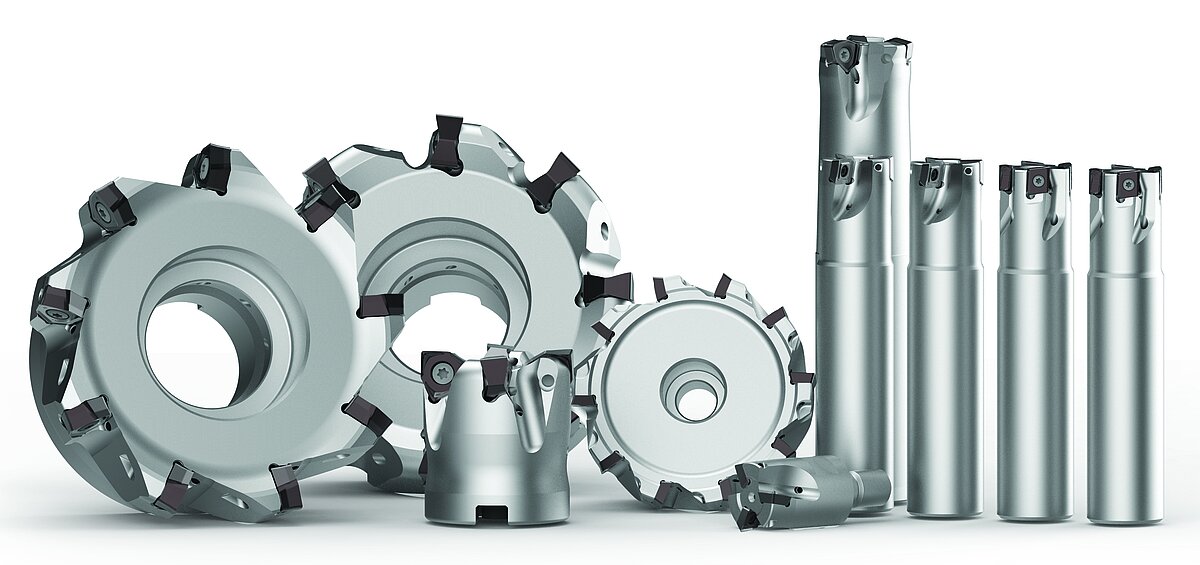
CHEAP ISN'T SEXY TO US
Mitsubishi Materials focuses on quality, precision, and challenging machining tasks. In an interview at this year’s AMB in Stuttgart, Mirko Merlo, President of the Metalworking Solutions Division, explains how the company plans to grow internationally, why price isn’t the only factor, and which market segments offer particular potential.
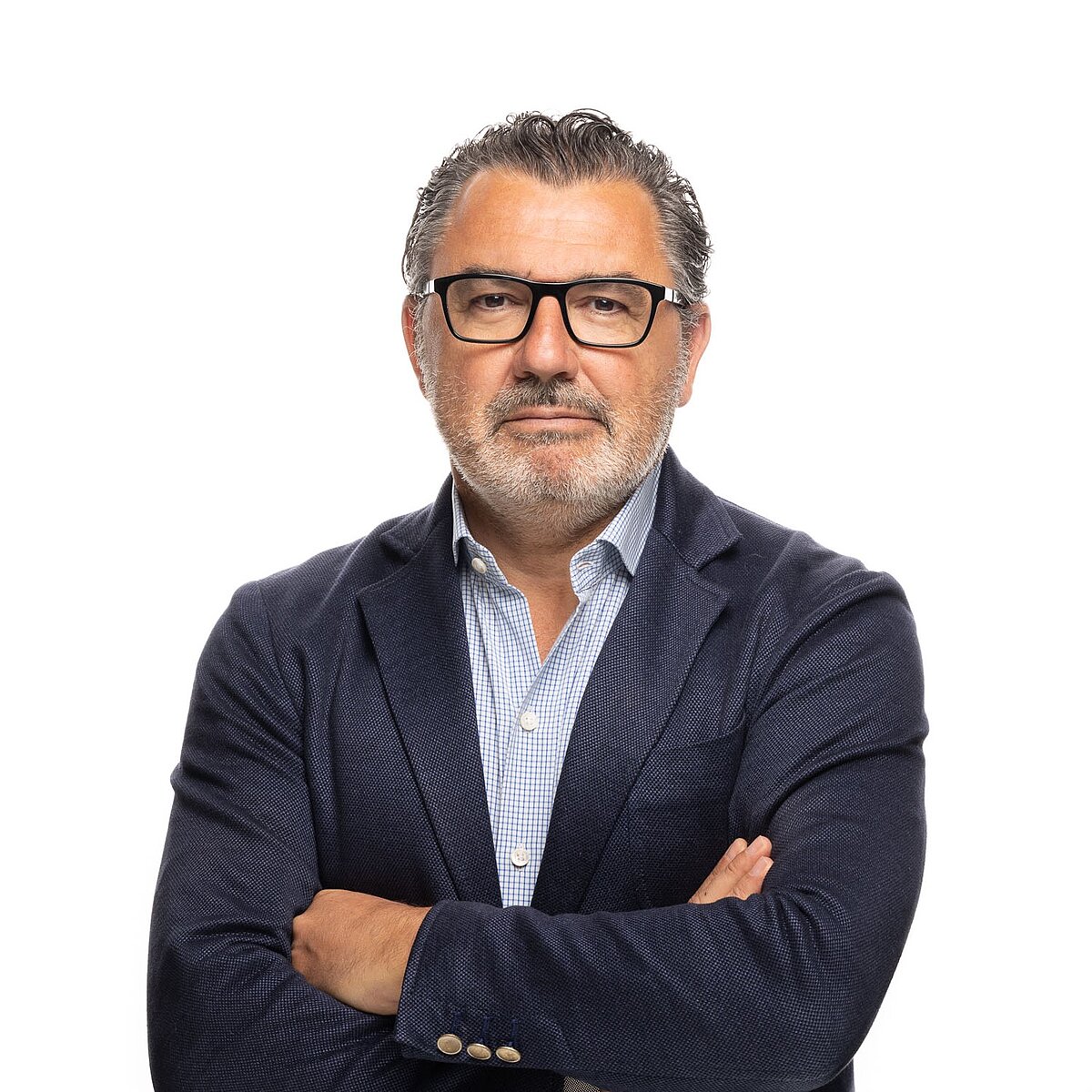
Mirko Merlo - President of the Metalworking Solutions Division at Mitsubishi Materials
The machining market faces major challenges: Users must reduce costs, increase productivity, and machine increasingly demanding materials. For tool manufacturers, this means combining high performance with cost-effectiveness. Mitsubishi Materials is committed to quality, innovation, and technological expertise - and aims to further expand its position in the premium segment.
INTERNATIONALIZATION WITH A SENSE OF PROPORTION
Mirko Merlo has been President of Mitsubishi Materials’ Metalworking Solutions Division since April 2026. Prior to that, he served as Chief Strategy and Sales Officer for two years. During that time, he believes the company made significant strides in advancing its international focus. “The company is already exceptionally well-positioned in many areas. That’s why I’m not looking to make fundamental changes across the board,” says Merlo, referring to the approximately 6,000 employees. “We need to think more globally, make decisions faster, act more decisively, and deliver results. We have a strong foundation and the potential to achieve much more. My goal is to fully realize this potential and propel the company to the very forefront of global competition.”
Merlo sees opportunities to expand the company’s market position, particularly in Europe. The focus is especially on Eastern European countries. He also sees opportunities for further growth in North America and Mexico, as well as in Asian markets such as Vietnam, Indonesia, Thailand, and Malaysia. The goal is not to sell the largest possible volumes at the lowest possible prices. “Cheap isn’t sexy for us,” says Merlo, summing up the strategic direction. Mitsubishi Materials aims to establish itself more firmly in the premium segment and grow in areas where quality and technological excellence make the decisive difference.
QUALITY MUST PAY OFF
For Merlo, a key challenge facing the industry is the tension between price and performance. High-quality tools can boost productivity and improve manufacturing processes. At the same time, they compete with products where the purchase price is the primary consideration. “Our philosophy is: better performance and high quality at a reasonable price,” explains Merlo. What matters most, he says, is the contribution a tool makes to the overall cost-effectiveness of the manufacturing process. Therefore, focusing solely on the tool’s price does not tell the whole story. For Mitsubishi Materials, differentiation through quality is closely linked to the Japanese understanding of quality. “For us, perfection is the top priority,” Merlo emphasizes. This commitment shapes not only development and manufacturing but also collaboration with customers. Listening to and understanding users’ requirements are key components of this philosophy. Just how deeply this understanding of quality is embedded in the manufacturing processes is also evident in the relocation of production. Even with identical machines, technologies, and processes, it can take six to twelve months for a product at a different location to achieve the same level of quality as in Japan. The majority of products are manufactured there. Mitsubishi Materials also develops or produces certain products in Europe when market demands warrant it.
ENGINEERING PARTNER FOR DEMANDING APPLICATIONS
Mitsubishi Materials does not view itself as a comprehensive engineering partner for all manufacturing tasks. Merlo points to the high level of expertise among many customers, who have an in-depth understanding of their own components and processes. The toolmaker’s role, therefore, is not to provide general training to users on their manufacturing processes, but rather to offer targeted support in areas where its own expertise adds value. Mitsubishi Materials is particularly interested in applications that require high precision and involve materials that are difficult to machine.
A key sector is aerospace. The company already has a strong presence in this segment in Asia, the U.S., and Europe, but sees further growth potential. The machining of small, high-precision components is also one of its strengths. Mitsubishi Materials remains active in traditional materials such as castings as well, although Merlo believes the opportunities for differentiation are more limited in that area.
PKD, DIAMOND COATING
Merlo also sees PKD tools gaining in importance. What used to be an option in certain applications is increasingly becoming the standard. In addition to changes in drive technology, there are other areas of application. Furthermore, the company is focusing on diamond coating. Mitsubishi Materials developed the necessary technology itself more than ten years ago and operates corresponding coating facilities at various locations.
ADDITIONAL ACQUISITIONS
The portfolio is also being expanded through targeted acquisitions. With the acquisition of the Italian company UFP S.r.l., a specialist in custom tools, Mitsubishi Materials is strengthening its expertise in this area and expanding its offerings to meet specific machining requirements.
RECYCLING AS A STRATEGIC FACTOR FOR SUCCESS
Another issue that is becoming increasingly important for Mitsubishi Materials is recycling and a well-thought-out approach to a functioning circular economy. This also includes services such as regrinding and recoating tools, which allow resources to be used for longer. For Merlo, the focus is less on the buzzword “sustainability” and more on a responsible and long-term approach to the use of raw materials: “Even though recycling costs extra money, it’s becoming more important than ever,” he emphasizes. The acquisition of H.C. Starck two years ago was therefore a significant step. According to Merlo, the Goslar-based company is one of the largest tungsten recycling companies outside of China. Through this acquisition, Mitsubishi Materials was able to more than double its recycling capacity. In doing so, the group not only strengthens its circular economy but also reduces its dependence on Chinese suppliers and raw material sources. Recycling thus becomes a strategic factor that combines sustainability with security of supply.
GROWTH THROUGH TECHNOLOGICAL EXPERTISE AND INNOVATION
For the next five years, Merlo sees the key priorities as further internationalization and a stronger presence in markets that have been less developed to date. In Europe in particular, Mitsubishi Materials is not yet as large as it could be, in his assessment.
The foundation for this growth lies in high-quality products, precision, and solutions for demanding machining tasks. Rather than pursuing volume at any cost, the company intends to focus more strongly on profitable business areas in the premium segment.
Merlo’s message to the market is clear: The lowest tool price alone should not determine a purchasing decision. What matters most is the contribution a tool makes to the productivity and quality of the entire manufacturing process. There will be no compromises on quality in the future either. This is precisely where Mitsubishi Materials sees its opportunities - and the foundation for further international growth.