![[Translate to English:] InDiamond.world](/fileadmin/_processed_/a/1/csm_InDiamond_Logo_2021_1fb017de30.png)
High-performance filtration for ceramic processing: A quantum leap in tool life and process reliability
In the high-precision manufacturing of components for the semiconductor industry, the quality of the process media plays a central role. Especially when machining ceramic materials, extremely abrasive particles place the highest demands on filtration technology. The example of a long-standing user in Berlin illustrates the impact that consistently refined multi-stage filtration has on service life, process stability, and cost-effectiveness.
The long-established company Lehmann-UMT, based in Jocketa in the Saxon Vogtland region and employing approximately 100 people, is the leading specialist for sophisticated filtration solutions in all machining and ablative manufacturing processes. Whether grinding, lapping, honing, eroding, turning, milling, or drilling—Lehmann-UMT develops customized and precisely tailored filtration concepts that are exactly matched to the respective process requirements.
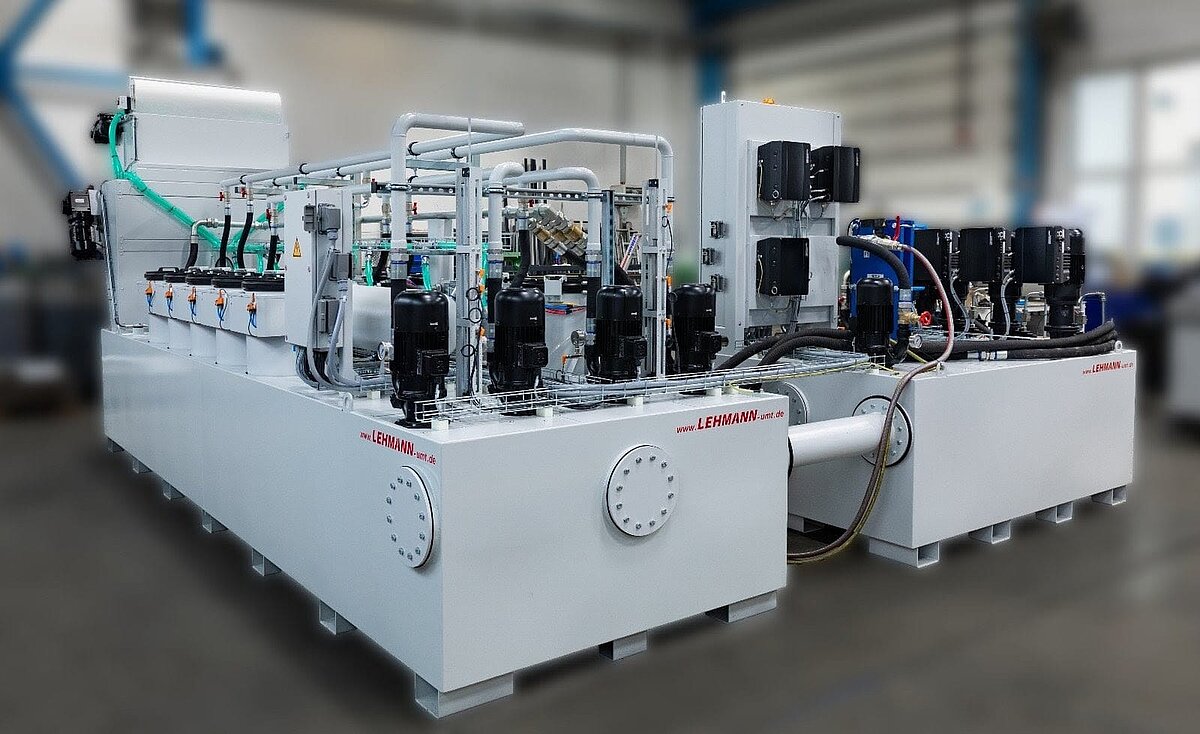
Multi-stage Lehmann filtration for coarse and fine particles
Initial Situation: High Wear Due to Inadequate Filtration
The Berlin facility produces high-precision components that are later used in lithography machines. In an initial machining step, the components are roughly pre-machined, generating large amounts of ceramic abrasive particles. Subsequent fine-machining processes generate extremely fine particles in the range of a few micrometers, which significantly affect surface quality and dimensional accuracy.
Previous filtration solutions, including those based on centrifuge technology in bypass mode, were unable to adequately meet these requirements. A significant proportion of fine and highly abrasive particles remained in the process medium, leading to massive wear on pumps, machining spindles, and other components of the CNC machines. The result was short service life and preventive replacement intervals: spindles on machining centers were sometimes replaced annually as a preventive measure—at a cost of around 50,000 euros per machine.
Introduction to Edge Filtration Technology
Based on Edge technology, Lehmann-UMT developed the idea of further refining the filtration process and combining systems with additional filtration stages—tailored to the specific requirements of ceramic machining. What began as single-stage systems evolved into multi-stage systems that progressively remove ceramic particles from the oil.
Multi-stage filtration for coarse and ultra-fine particles
The systems currently used by Lehmann-UMT combine multiple filtration stages to reliably remove both high contaminant loads from rough machining and the finest particles from fine grinding. Particles down to the range of 2–3 μm are filtered. The goal of this design is not only consistently high filtration quality but also a significant extension of the service life of the filter elements while simultaneously reducing energy consumption.
Ceramic abrasives are considered particularly abrasive—comparable to continuous sandblasting within the system. Many conventional filtration solutions fail because a stable filter cake does not form or filter elements become clogged quickly. The backwashable filtration technology used here represents a technical solution that functions reliably even under the most difficult conditions.
For more than ten years, users have had over 40 Lehmann-UMT systems of this design in operation, some of them running continuously 24/7.
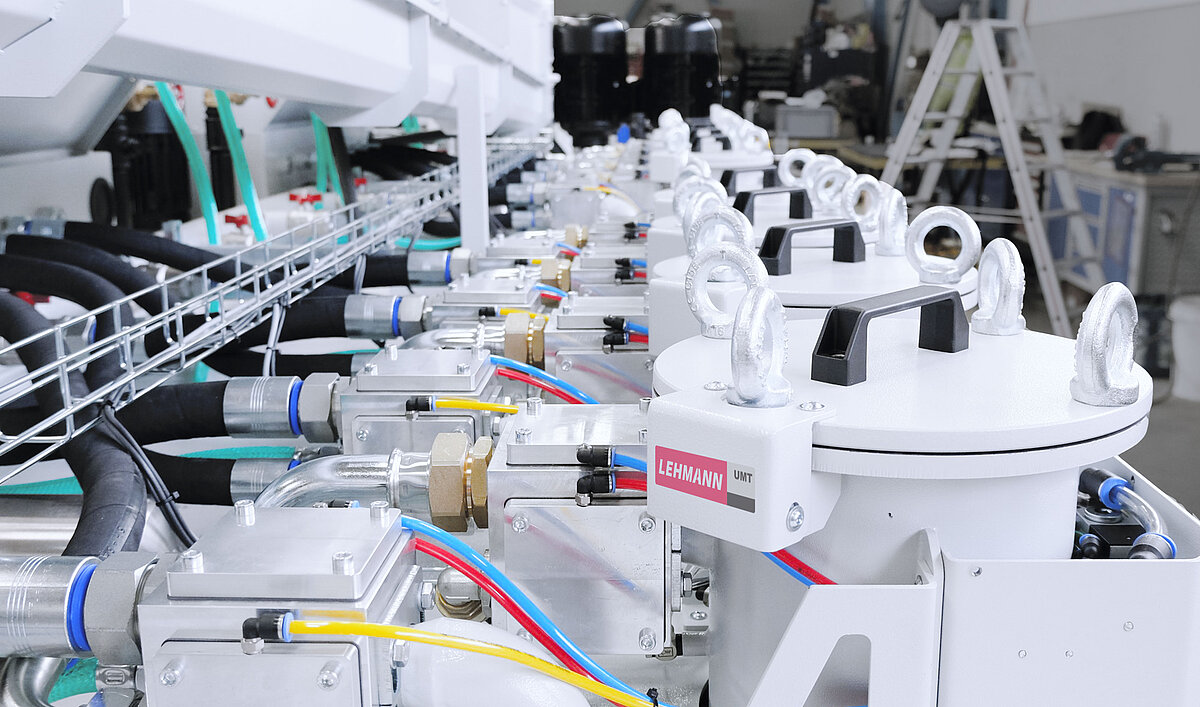
Ultra-fine filtration using Lehmann-UMT's StingR technology
Significantly extended service life and higher availability
The impact on machine uptime is substantial. Components such as spindles, which used to be replaced regularly as a precautionary measure, now have service lives of several years. Production-related downtime caused by filtration problems is largely a thing of the past.
The filter elements themselves also have long service lives. In ceramic processing, these typically exceed twelve months and are replaced not on a scheduled or preventive basis, but based on their condition. The systems independently monitor relevant process parameters and signal when a replacement is actually necessary. This prevents unnecessary replacement of parts.
Further Development: StingR Technology and Energy Efficiency
In the recent past, the technology has been further optimized at Lehmann-UMT. The focus was on increasing the filter areas within the individual stages—without increasing the overall size of the systems. This was complemented by new filter elements and improved flow paths, which significantly reduced filter resistance.
The result is systems with up to 30% better energy efficiency compared to previous generations. Lower differential pressures mean less pump power and thus significantly reduced energy consumption.
Another feature of the innovative StingR technology is improved accessibility: filter elements can be replaced in a very short time if necessary without interrupting the production and filtration process. In practice, we achieve long service life for our customers and thus very low maintenance requirements, leading to significant cost savings.
Conclusion
The consistent further development of Edge and StingR filtration technology by Lehmann-UMT demonstrates the potential of precisely tailored high-performance filtration. For users in the ceramics and precision machining industries, this means not only longer service life for machine components and filter elements, but above all significantly higher process reliability. In manufacturing environments where individual machining steps run continuously for several days and every stoppage causes scrap, this is a decisive competitive advantage.
Source | Lehmann-UMT