![[Translate to English:] InDiamond.world](/fileadmin/_processed_/a/1/csm_InDiamond_Logo_2021_1fb017de30.png)
IEW Vacuum Brazing Systems – When every grain is in the right place
How IEW is breaking new ground in the vacuum brazing of diamond tools with its VVBM series (Vertical Vacuum Brazing Machine) and the VaBriDia research project
What if grinding wheel segments could be replaced instead of having to dispose of the entire tool? What if diamond grains were positioned precisely rather than being distributed at random? And what if a material-bonded joint could be achieved entirely without electroplating processes or flux? This is precisely what IEW Induktive Erwärmungsanlagen GmbH from Austria is currently working on: based on plant technology that has proven itself in practice for years, and as part of a research project that shows the way forward: VaBriDia ‘Vacuum Brazing of Diamond Tools with Powder-Based Application’.
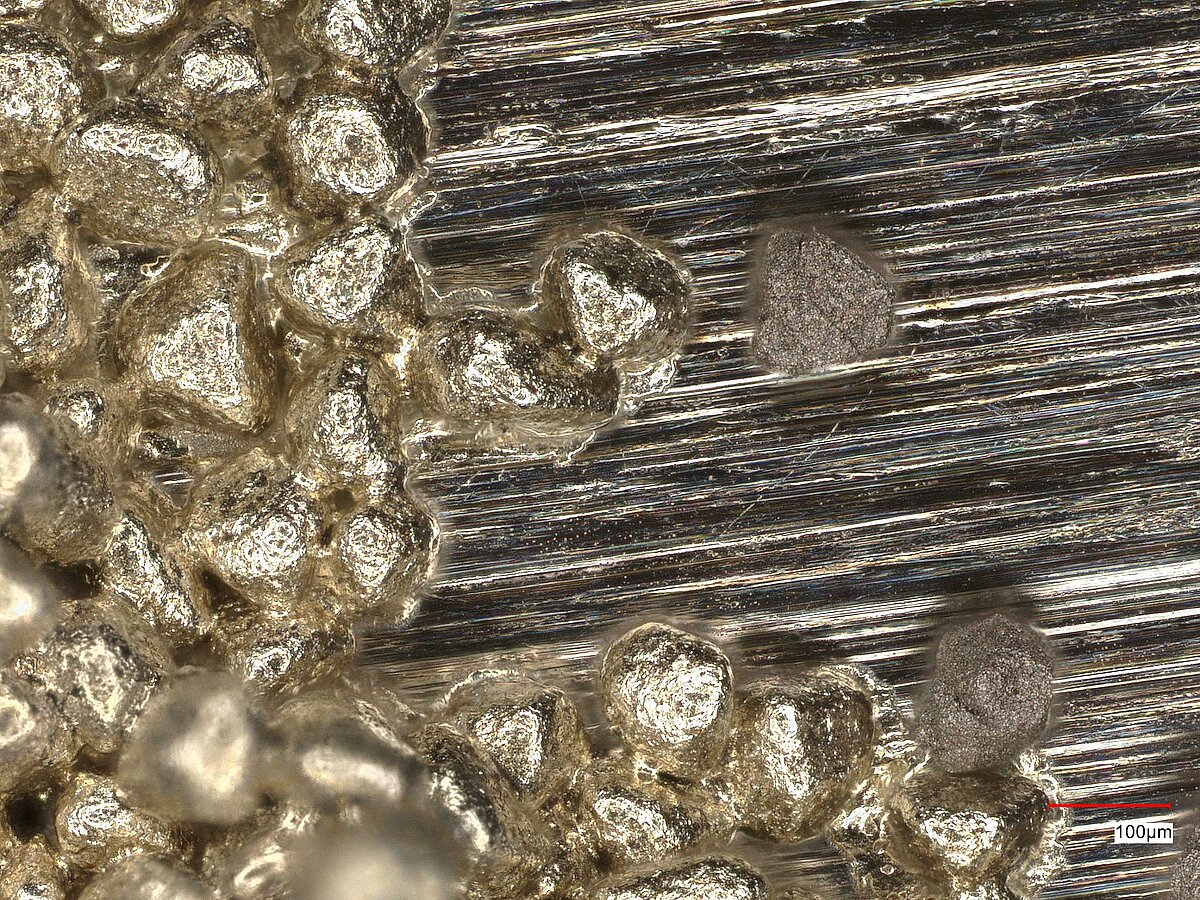
Microscopy of vacuum-brazed diamond grains
New brake discs, new requirements
From the end of 2026, the Euro 7 emissions standard will come into force, which, for the first time, will also limit particulate emissions from brake discs. This brings hard-coated brake discs into focus: a very hard, wear-resistant layer is applied to a grey cast iron base disc, which must then be precision-ground. This is precisely where the problem has lain until now. Sintered grinding segments quickly lose their profile due to their characteristic self-sharpening properties and must be reworked frequently. Electroplated tools are more precise, but cannot function without environmentally harmful process chemicals. For the new, particularly hard coating, there has so far been no tool that combines a long service life with clean manufacturing.
The basic principle: precision rather than chance
The idea put forward by the research consortium led by the IEW is a new manufacturing approach for grinding segments. Instead of simply mixing diamond grains and a binder and sintering them, or applying the grains electroplating, the IEW relies on three separate, coordinated steps. First, a precisely measured quantity of brazing paste is applied to the tool body via micro-dosing. The diamond grains are then deposited in a fluidised bed. In this process, a stream of air keeps the grains suspended, ensuring they are distributed evenly over the brazing paste. Only then does the actual vacuum brazing take place, during which the brazing paste melts and permanently bonds the diamond grains to the tool body. The difference compared to traditional methods is that the number of grains and their positioning are no longer left to chance, but can be precisely controlled. This has a significant impact on tool life and grinding results.
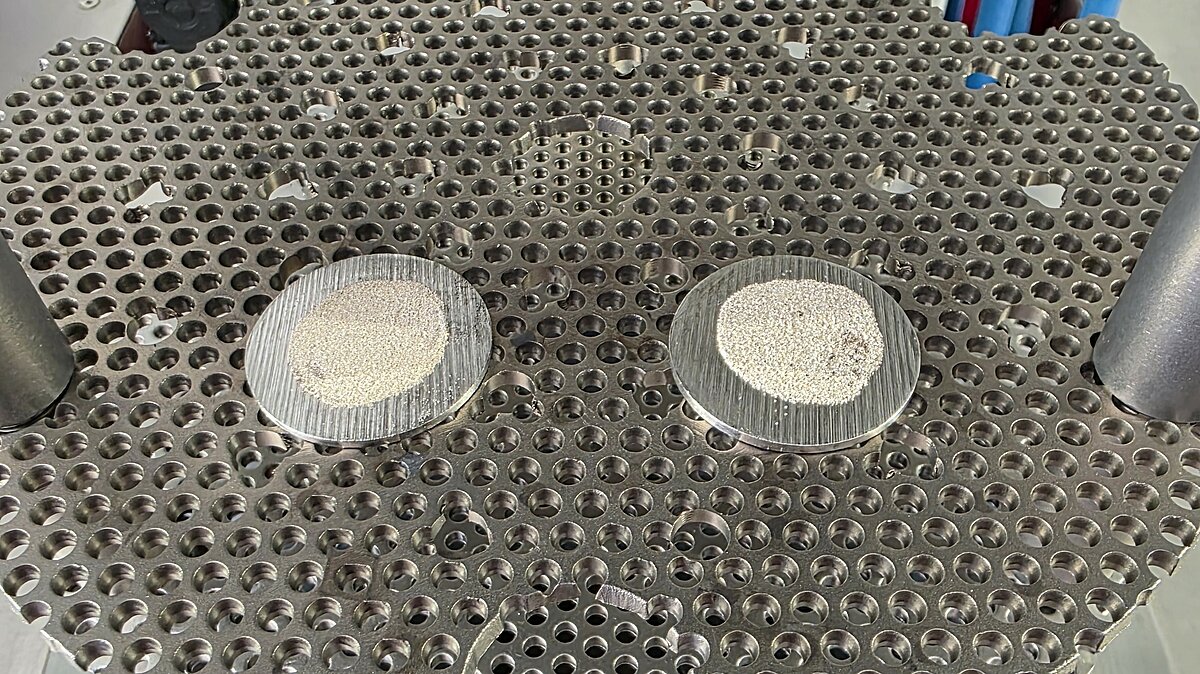
Vacuum-brazed development components
The benefits of replaceable segments
As well as the new coating process, the project also focuses on the design of the grinding wheel itself. The aim is to create a reusable base body onto which individual segments can be mounted. Worn segments can be replaced or recoated, rather than having to dispose of the entire tool. In addition, cooling channels integrated directly into the segments will direct the coolant to where it is needed during grinding. This improves surface quality and prolongs the tool’s service life.
Practical benefits
- Less scrap: the diamond grains are positioned in a defined pattern rather than being distributed randomly.
- Longer service life: thanks to precisely adjusted grain protrusion.
- Cleaner process: without the chemicals used in electroplating processes or corrosive fluxes.
- Lower follow-up costs: segments can be replaced and re-coated, rather than replacing the entire tool.

Vacuum-brazed carbide body with diamond powder embedding
The equipment behind it: VVBM150 and VVBM200
A process of this kind only works if the brazing system itself operates with precision and reproducibility. This is precisely what the VVBM150 and VVBM200 vacuum brazing systems from IEW are designed to do; they have been in operation in over 35 installations worldwide since 2018. Their vertical design provides ample space per batch, allowing a large number of tools to be brazed simultaneously. A patented three-zone temperature control system enables different materials to be processed in the same cycle at their respective optimum temperatures – for example, sensitive diamond tools at lower temperatures and more robust carbide tools at higher temperatures. The brazing chamber is made of quartz glass rather than metal, which prevents contamination and provides a viewing window for process monitoring. Should the power fail during brazing, the system uses a specially developed resume function to continue the process exactly where it was interrupted, rather than scrapping the entire batch. A complete brazing cycle takes, depending on the tool, well under two hours and costs only around 4 euros in energy. This makes the systems attractive for both smaller businesses and industrial series production. Those who do not wish to purchase their own system can also have components brazed on a contract basis by IEW.
The VaBriDia research project
The ongoing VaBriDia research project demonstrates just how seriously IEW takes this development. Together with the Fraunhofer Institute for Manufacturing Engineering and Automation IPA, perfecdos GmbH and Zermet Zerspanungstechnik GmbH & Co. KG, IEW is working as the consortium leader over a two-year period on an automatable process for vacuum-brazed diamond tools with integrated cooling channels. The application described at the outset serves as an example: grinding wheel segments for machining Euro 7 brake discs. Each partner contributes its own area of expertise: Zermet provides knowledge of tools and brake discs, perfecdos contributes dosing technology, Fraunhofer IPA provides fluidised-bed coating and testing methods, and IEW provides vacuum brazing technology.
IEW and Fraunhofer IPA have already laid the foundations for this in earlier trials: small, pin-shaped diamond tools have already been successfully produced using brazing paste and fluidised-bed coating, and tested in the laboratory. In the current project, this knowledge is now being applied to the significantly more complex geometry of the grinding wheel segments. At IEW, the first brazing trials are currently underway to identify a suitable brazing alloy that reliably wets the diamond without damaging the grains due to excessively high temperatures. At the same time, Zermet is producing the first tool bodies and grinding segments so that the coating and brazing processes can be evaluated separately. The finished segments are then tested on a specially constructed test rig, in comparison with tools available on the market.
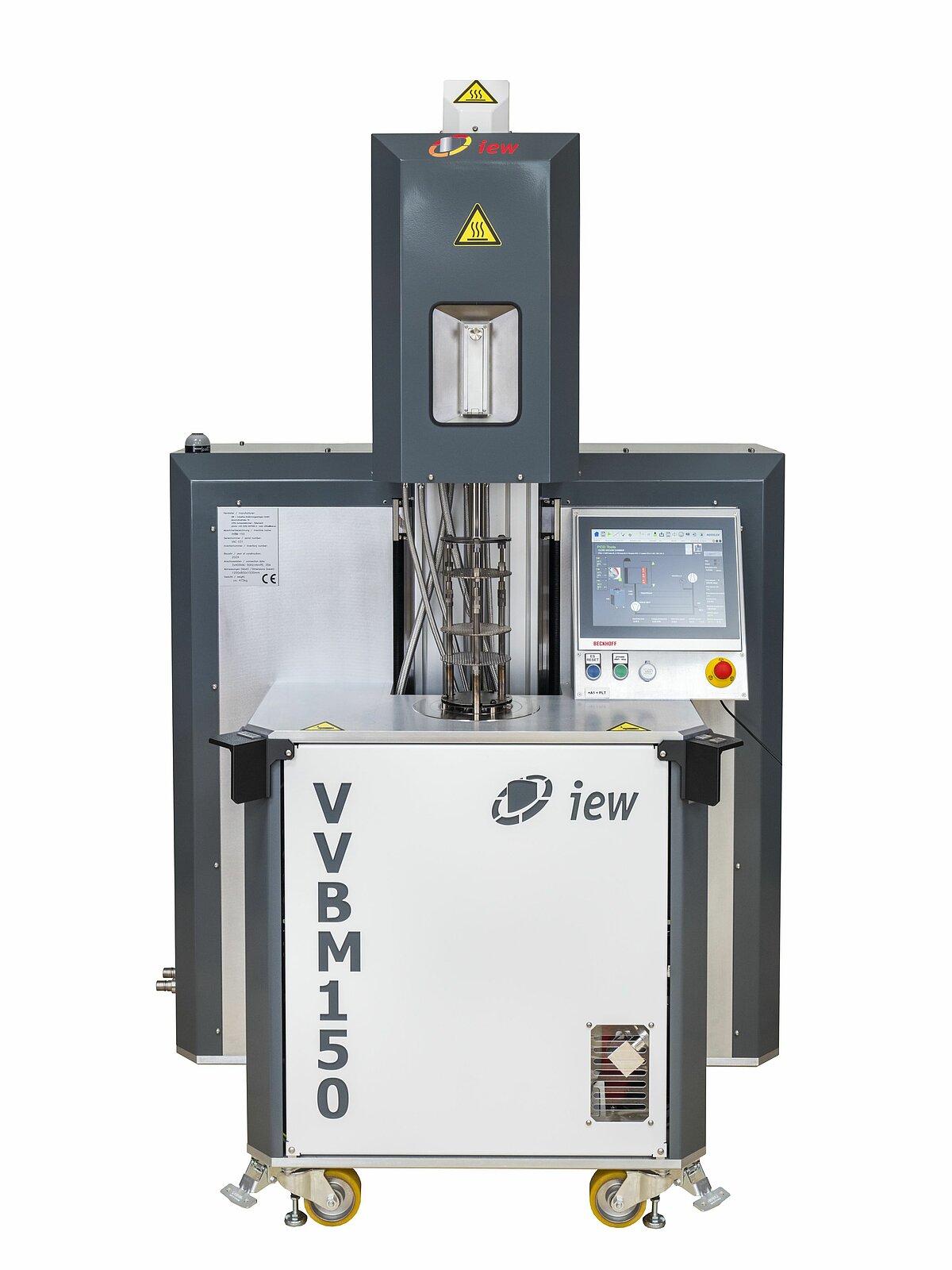
VVBM150 Vacuum Brazing System
Outlook
If the transfer to grinding wheel segments is successful, this is just the beginning for IEW: the combination of micro-dosing, fluidised-bed coating and vacuum brazing is also expected to be suitable for other applications in the long term, such as in medical technology or micro-machining. For customers, this already means that those who opt for a VVBM150 or VVBM200 are investing in a system that will evolve alongside the next generation of diamond tools. IEW is equally happy to carry out initial brazing trials itself or to undertake production on a contract brazing basis. IEW looks forward to every new challenge presented by its customers.
Incidentally, IEW remains open to partners from the automotive industry who are interested in collaborating on this research project, whether as end-users, suppliers or those with complementary expertise. Anyone interested in getting involved is welcome to contact IEW.
Source | IEW
Funded under the Eurostars programme of the European Partnership. National funding provided by the Federal Ministry for Research, Technology and Space (BMFTR) and the Austrian Research Promotion Agency (FFG).